
When it comes to Source to Contract software, mid-market procurement teams sit in an awkward middle ground.
Spreadsheets and email no longer scale. But heavyweight enterprise S2C suites often bring cost, complexity, and change management that few teams actually want or need. Source-to-Contract sits right at the centre of this tension. It is where strategy, governance, supplier engagement, and commercial outcomes meet, and where the wrong choice of tech quickly becomes visible.
Over the last few years, a new generation of S2C platforms has emerged to serve this gap. These tools are designed to deploy faster, feel more intuitive, and support better governance without the baggage of enterprise software suites.
Some lean into AI-driven workflows, others prioritise collaboration, modular adoption, or sector-specific depth.
What they share is a clear understanding of how mid-market procurement actually works day-to-day.
In this article, we highlight 11 of the best Source to Contract software for mid-market organizations. Each offers a distinct approach to modernising sourcing and contracts, helping teams move beyond manual processes and towards more consistent, value-driven procurement.
These Tools Are Within Reach of Mid-Market Businesses
Here’s the good news.
All the platforms featured in this article are accessible to mid-market companies. Your business doesn’t need to be a Fortune 500 enterprise to benefit from these solutions.
Sure, there are some of these software vendors who have enterprise customers too. But, they’ve designed their products to also work for businesses in the $100 million to $1 billion revenue range. That means reasonable pricing, sensible implementation timelines, and user experiences that don’t require a team of consultants to navigate.
This is not sponsored content
No provider has paid to appear on this list. Ask yourself whether the same is true of other similar articles you read.
1. Cotiss
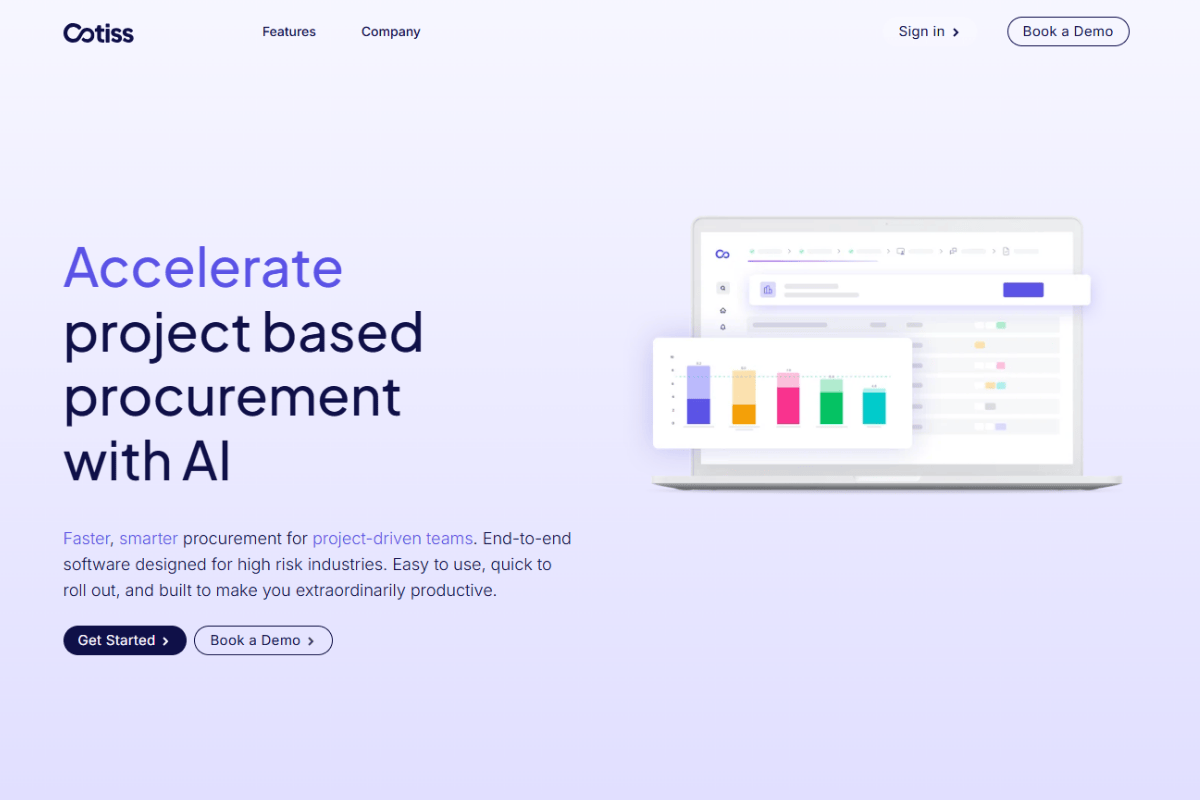
Cotiss, founded in 2020, is positioning itself as a practical alternative to heavyweight Source-to-Contract platforms for smaller procurement teams that want rigour and control without complexity. Built with ease of adoption in mind, it reflects a growing demand for tools that fit how procurement actually works day to day, especially in highly regulated, complex industries, as well as local government.
Rather than forcing teams into rigid processes, Cotiss focuses on improving visibility, collaboration, and governance across sourcing, contracts, and suppliers. Its strength lies in helping teams move away from fragmented, manual workflows and towards more structured, defensible decision-making, without the burden of lengthy implementations or heavy IT involvement.
A key strength of Cotiss is its AI-powered bid analysis features, especially when it comes to evaluating non-price factors.
Key Info:
- Founder / CEO: Harry Wilde & Matthew Whiting
- Year founded: 2020
- Number of employees: 11-50
- Headquarters: Auckland, New Zealand
- Industry sectors served: Oil & Gas, Utilities, Telecommunications, Local Government, Sports & Event Venues
2. DeepStream
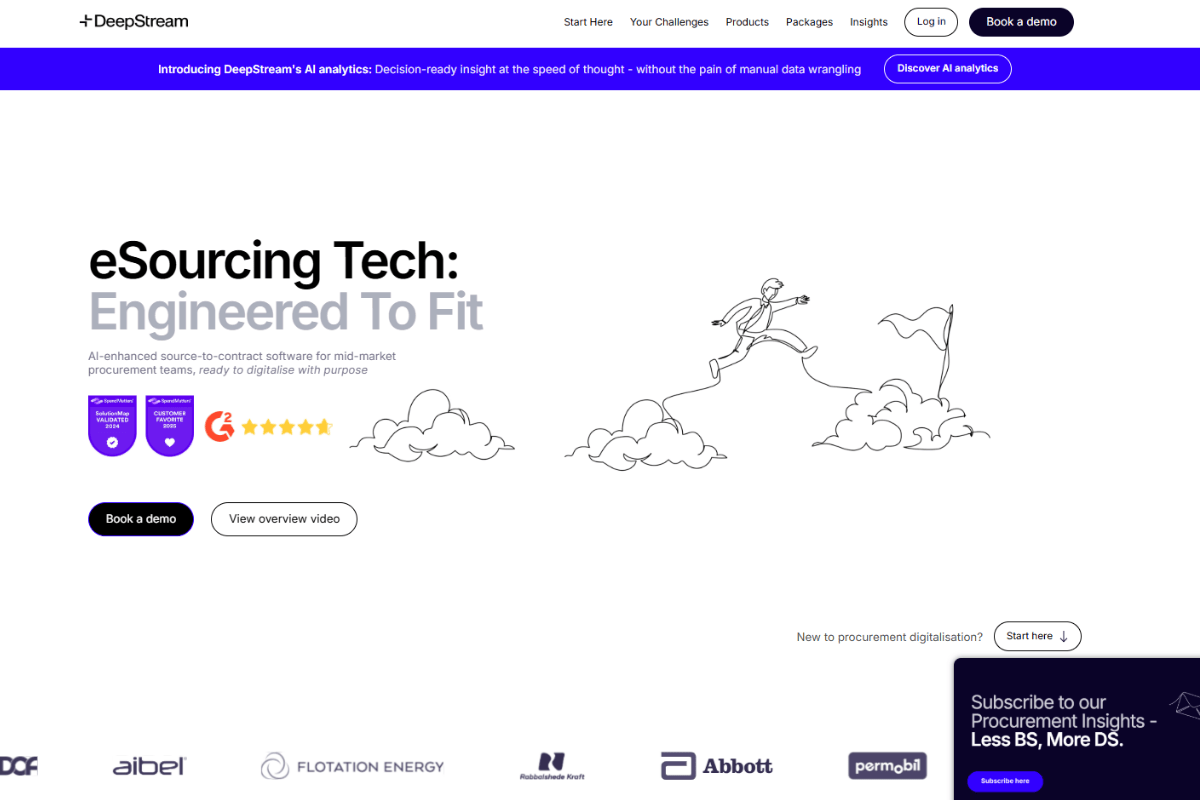
DeepStream, founded in 2016, reflects a wider shift in procurement away from inbox-driven sourcing towards more structured, transparent ways of working. Built in London, the platform tackles a familiar problem for many teams: critical sourcing decisions still being managed through emails and spreadsheets that offer little visibility or auditability.
DeepStream’s value lies in bringing sourcing activity into a modern UI-powered, single, collaborative environment where suppliers, stakeholders, and data are properly connected. It combines structured RFx workflows with real-time collaboration and advanced AI-supported scenario-based bid award analysis. Teams can manage RFPs end-to-end in one place, without the need to export post-bid analysis to Excel.
For organizations under increasing pressure to evidence decisions and improve supplier engagement, that balance of speed and control is becoming hard to ignore.
Key Info:
- Founder / CEO: Dan Gianfreda
- Year founded: 2016
- Number of employees: 11-50
- Headquarters: London, UK
- Industry sectors served: Renewable Energy, Environmental, Manufacturing, Oil & Gas, Automotive, Chemicals
3. Mercanis
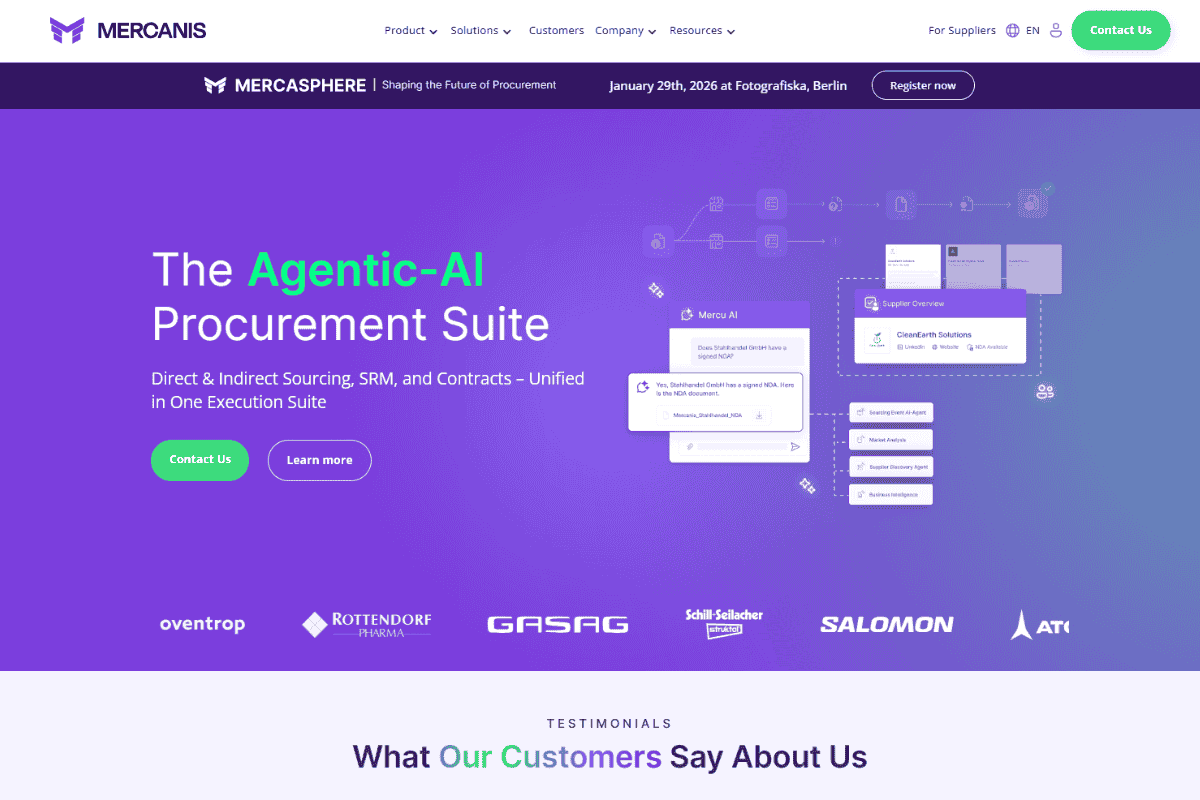
Mercanis, founded in 2020, is part of a new wave of procurement platforms. Designed for teams that have outgrown spreadsheets, need something more than simple e-sourcing software, but are wary of heavyweight suites. Based in Berlin, the company is gaining traction with mid-sized and larger enterprises looking for a more modern, flexible way to manage sourcing, supplier relationship management (SRM), and contracts.
Its approach reflects a broader shift in procurement towards automation and AI-supported decision-making, with generative AI woven into everyday workflows rather than bolted on as an add-on. By unifying data, processes, and insights in a single workspace, Mercanis aims to reduce friction and help procurement teams spend less time on administration and more time on value creation.
The Mercanis platform also offers spend analytics and should-costing capabilities, although these are not as comprehensive as best-of-breed tools that focus on these exclusively.
Key Info:
- Founder / CEO: Fabian Heinrich
- Year founded: 2020
- Number of employees: 51-200
- Headquarters: Berlin, Germany
- Industry sectors served: Chemical & Pharmaceutical, Energy & Utilities, Automotive, Manufacturing, Construction, Broader Corporate & Professional Services.
4. BuyingStation
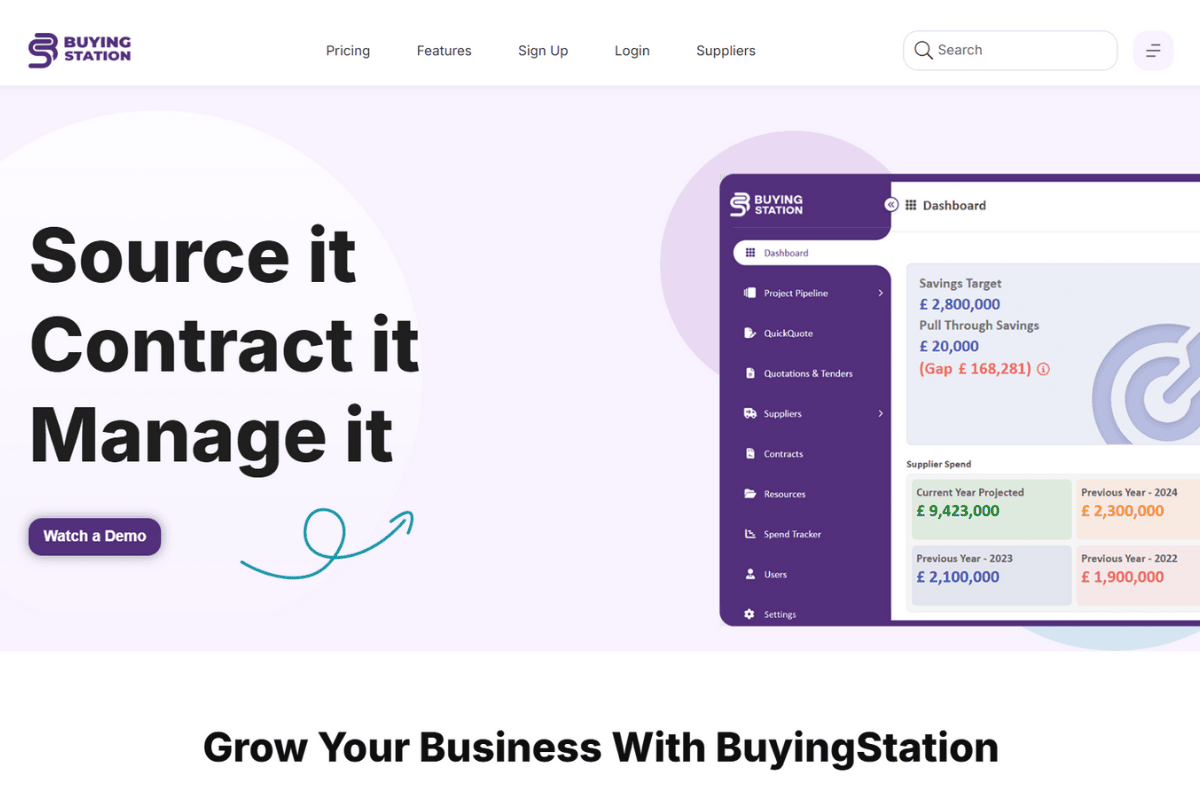
BuyingStation, developed by Novo-K, speaks to a familiar reality for many procurement teams: upstream processes are still too often fragmented, manual, and reactive. The platform is positioned around bringing structure and governance to sourcing, supplier management, and contracts without forcing organisations into heavyweight enterprise suites.
Its modular approach reflects a growing demand from mid-sized teams that want better visibility and control, but at their own pace. By centralising supplier data, sourcing activity, contracts, and spend insights, BuyingStation helps teams move away from ad hoc decision-making towards more consistent, defensible procurement practices.
For organisations under increasing pressure to improve compliance and transparency, that balance of rigour and flexibility is increasingly important. Buying Station is also one of the most transparent and competitively priced tools on the market, and packs a lot into the platform for the price.
Key Info:
- Founder / CEO: Kavita Cooper
- Year founded: 2015
- Number of employees: 11-50
- Headquarters: Reading, UK
- Industry sectors served: Sports & Entertainment, Hospitality, Public Sector, Not-for-Profit Entities
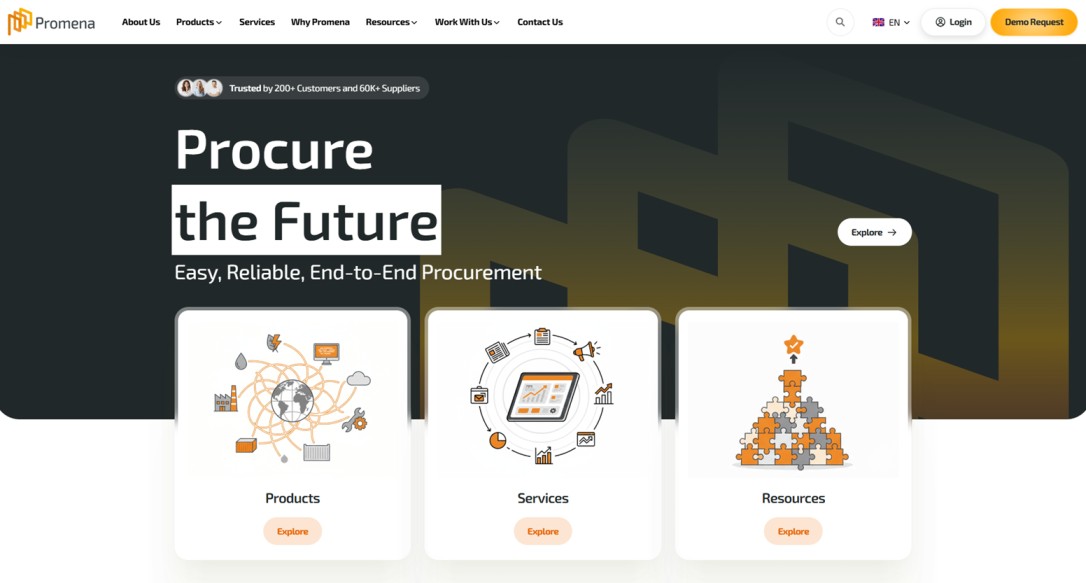
5. Promena
Promena, founded in 2001, represents a more established take on digital Source-to-Contract, built for organizations that need structure and scale in their sourcing operations. Part of the Koc-Zer Group, the largest conglomerate in Turkey, the platform has built a strong foothold across manufacturing, retail, finance, and the public sector, particularly in Turkey and with customers also in Western Europe.
Its relevance lies in helping procurement teams move away from opaque, manual tendering towards more transparent and data-led sourcing decisions. By bringing sourcing, auctions, supplier management, and spend analysis into a single environment, Promena supports teams running complex, high-volume events without unnecessary friction.
For organisations where governance, speed, and clarity matter, that balance remains a compelling proposition.
Key Info:
- Founder / CEO: Serhan Turfan
- Year founded: 2001
- Number of employees: 51-200
- Headquarters: Istanbul, Turkey
- Industry sectors served: Manufacturing & Industrial, Retail & Consumer Goods, Financial Services, Energy & Utilities, Public Sector, Healthcare & Pharmaceuticals
6. Market Dojo

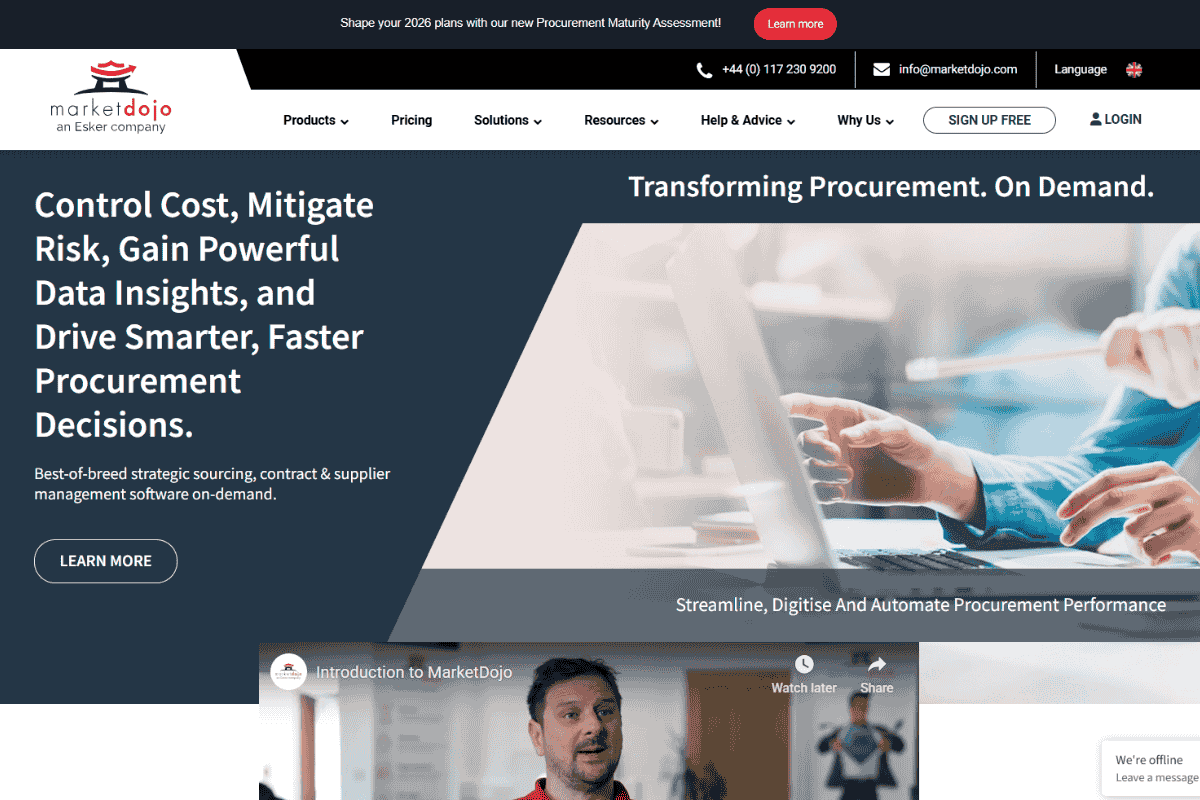
Market Dojo, founded in 2010, sits firmly in the camp of pragmatic procurement technology built around real-world sourcing needs. The platform has earned a following among teams that want to digitise sourcing without committing to heavy, long-term software commitments.
Its relevance comes from tackling everyday procurement friction, decentralised tenders, slow supplier onboarding, unmanaged tail spend, through tools that are simple to deploy and easy to use. The flexible, on-demand pricing model reflects how many teams actually buy software today, especially for project-based sourcing.
Since joining Esker in 2022, Market Dojo has combined that practicality with Esker’s broader mid-market enterprise reach in the Source-to-Pay and accounts payable automation space. These two together make it a compelling option for organisations seeking control across both strategic sourcing and transactional purchasing operations.
Key Info:
- Founder / CEO: Alun Rafique
- Year founded: 2010
- Number of employees: 11-50
- Headquarters: Gloucestershire, UK
- Industry sectors served: Public Sector & Government, Industrial Manufacturing, Professional Services
7. oboloo
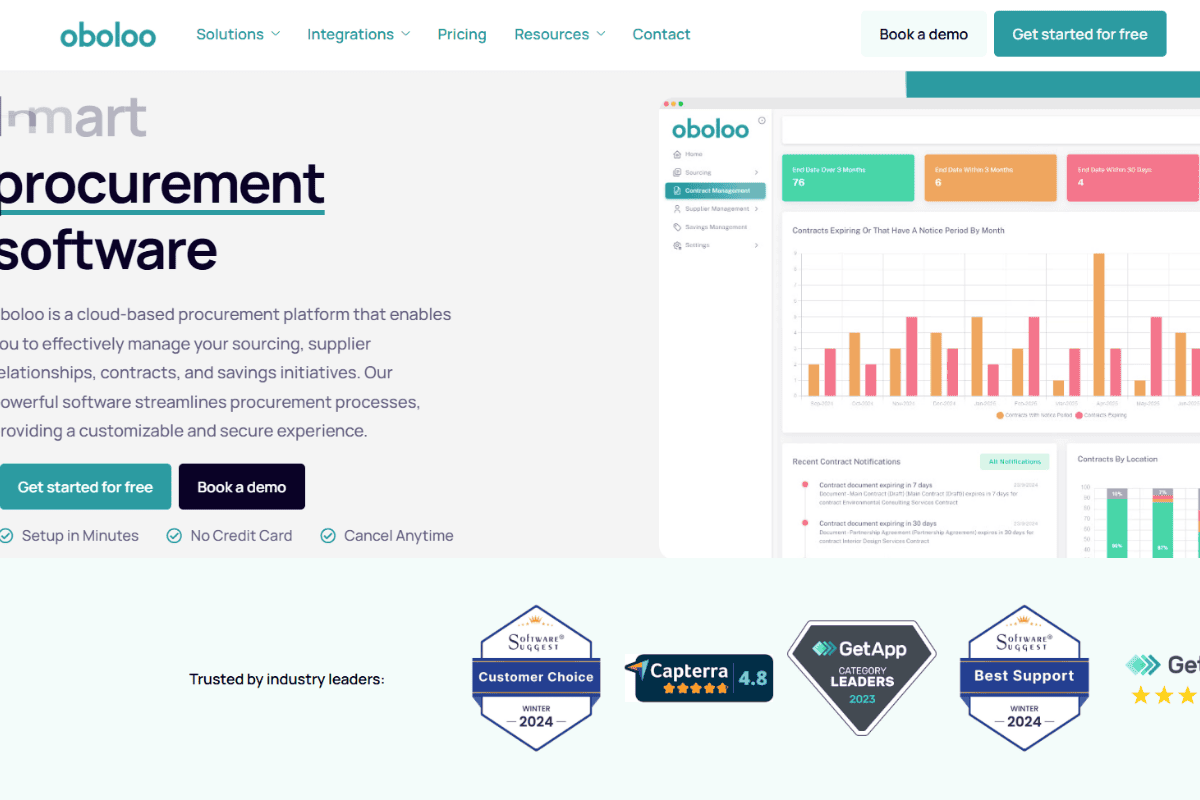
oboloo, founded in 2019, is part of a growing group of procurement platforms built specifically with SMEs in mind. Based in London, the platform focuses on making Source-to-Contract processes approachable, removing much of the complexity that typically puts smaller teams off investing in procurement software.
Its relevance lies in helping organizations introduce structure and discipline into sourcing, contracts, and supplier management without heavy implementation or IT dependency. By giving smaller procurement teams clearer visibility into compliance and savings, oboloo supports more informed decision-making and better value from suppliers.
For growing businesses looking to professionalise procurement without over-engineering it, that simplicity is a meaningful advantage. oboloo is an especially good choice for organizations who have fewer users and are happy with per-seat based pricing.
Key Info:
- Founder / CEO: James Lancaster
- Year founded: 2022
- Number of employees: 11-50
- Headquarters: London, England
- Industry sectors served: Industry-sector agnostic, with broad customer base across the private sector
8. Krinati
Krinati Solutions, founded in 2018, reflects a growing shift among global procurement teams towards more rounded, digitally driven sourcing practices. Based in Mumbai, India, the platform is aimed at organisations that have moved beyond simple reverse auctions but still struggle with manual processes, limited transparency, and fragmented collaboration.
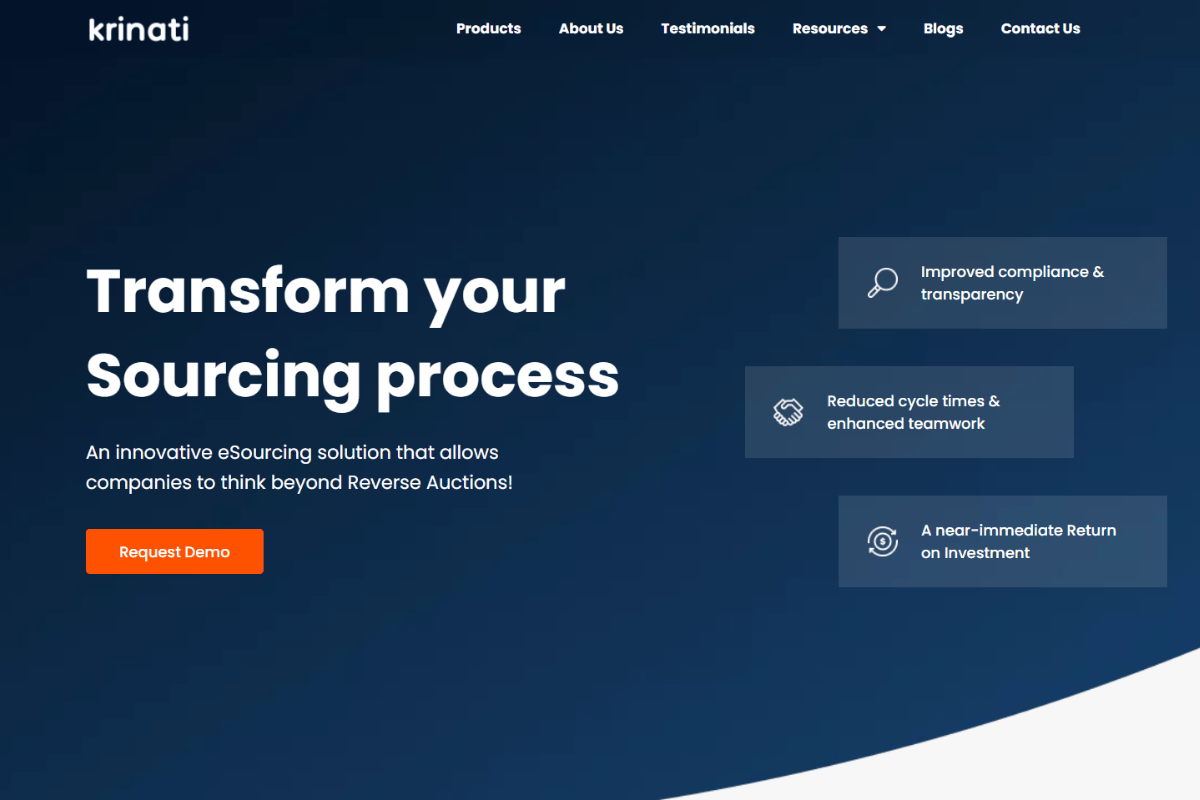
Its relevance lies in supporting more complex sourcing across direct, indirect, and CapEx categories, while embedding structure and governance into everyday decision-making. By combining eSourcing, supplier performance, and contract oversight with stronger stakeholder collaboration, Krinati helps teams shorten sourcing cycles and improve outcomes.
Krinati has its core customer base in India and the Middle East. Their solution also offers consulting services additionaly, for those organizations who are seeking support with procurement transformation and user adoption as well as just a software tool.
Key Info:
- Founder / CEO: Shankar VR
- Year founded: 2018
- Number of employees: 11-50
- Headquarters: Mumbai, India
- Industry sectors served: Consumer Goods, Financial Services, Insurance
9. OneMarket
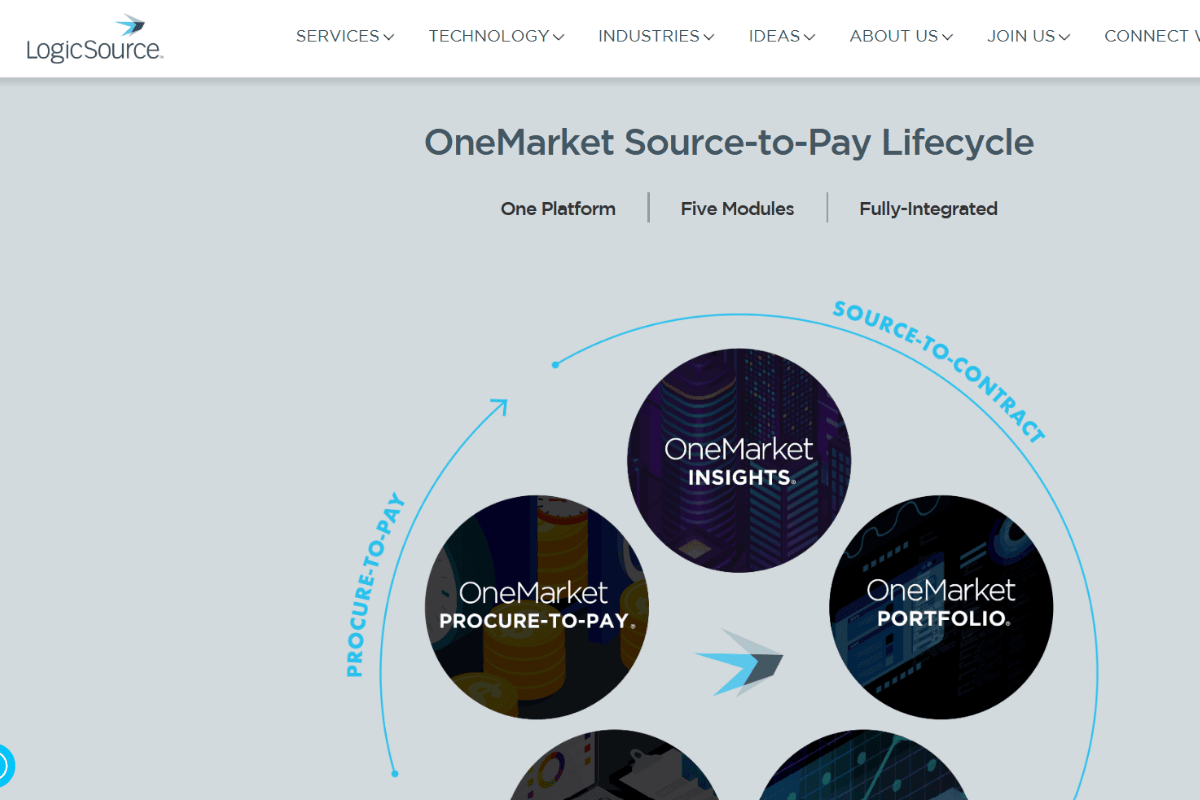
OneMarket, developed by LogicSource, reflects a more service-led approach to Source-to-Contract. Aimed squarely at indirect procurement in the upper end of the mid-market and the lower end of the enterprise sector, the organization offers more than just software.
Based in Connecticut, the platform sits at the intersection of technology, expertise, and market insight, addressing a common frustration for teams juggling disconnected tools and manual workflows. Its relevance lies in helping procurement move beyond transactional sourcing towards more consistent value delivery, with clearer visibility into spend, suppliers, and contracts.
By bringing data, workflows, and guidance into a single environment, OneMarket supports faster, more informed decision-making across procurement, finance, and legal teams. For organisations under pressure to evidence impact and savings, that combination of structure and support is increasingly compelling.
Key Info:
- Founder / CEO: David Pennino
- Year founded: 2011
- Number of employees: 201-500
- Headquarters: Westport, Connecticut, USA
- Industry sectors served: Retail, Consumer Packaged Goods, Healthcare, Financial Services, Private Equity
10. Procol

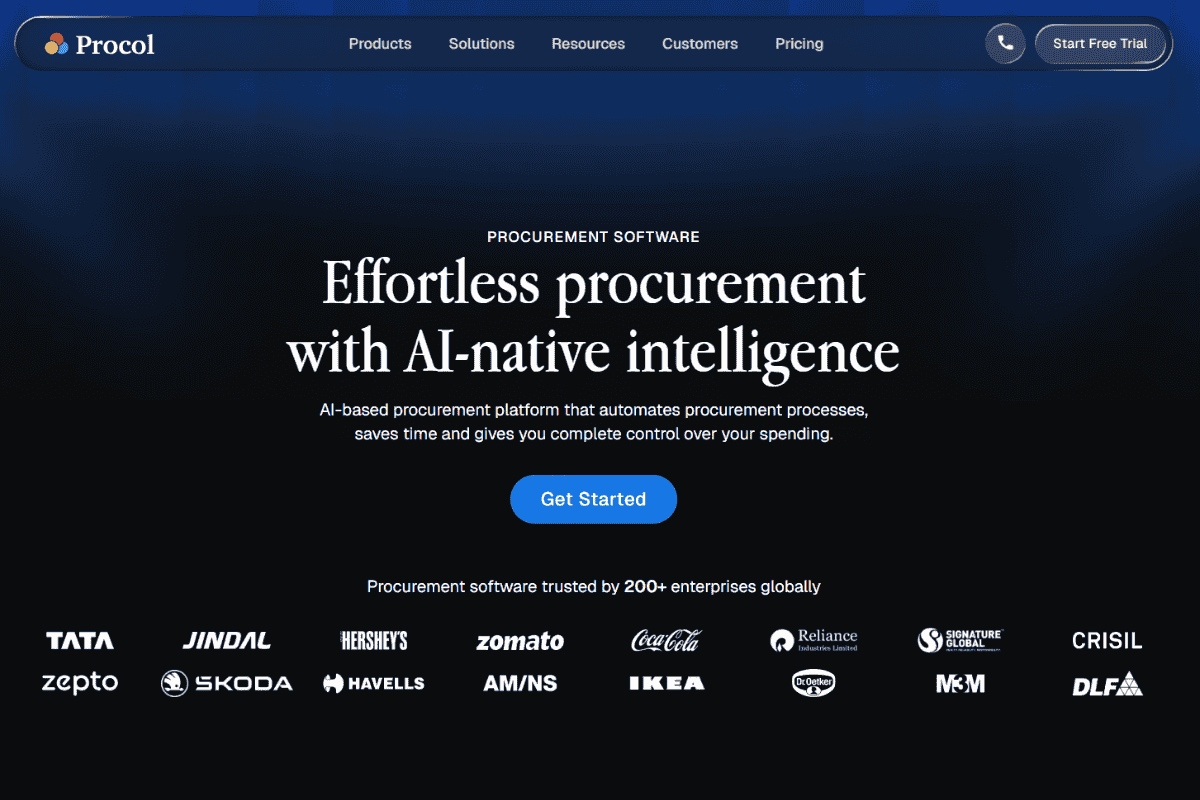
Procol, founded in 2018, represents a new generation of AI-native procurement platforms focused squarely on upstream transformation. Based in Gurugram, India, the company is targeting mid-market and enterprise teams that still rely on fragmented, manual sourcing processes despite growing pressure to move faster and reduce risk.
Its relevance lies in treating AI not as a bolt-on feature but as a core operating layer, with digital agents supporting sourcing, spend analysis, and supplier management. By automating decision-heavy workflows and improving visibility across systems, Procol helps teams shorten cycle times and uncover savings at scale.
The appeal of Procol lies in their modular suite capability, meaning that intake, source-to-pay (S2P), and supplier management are all taken care of with their individual modules, as well as core S2C functionality.
Key Info:
- Founder / CEO: Gaurav Baheti
- Year founded: 2018
- Number of employees: 51-200
- Headquarters: Gurugram, India plus US operations in New York
- Industry sectors served: Retail & Consumer Goods, Industrial Manufacturing, Food & Beverage
11. Unimarket
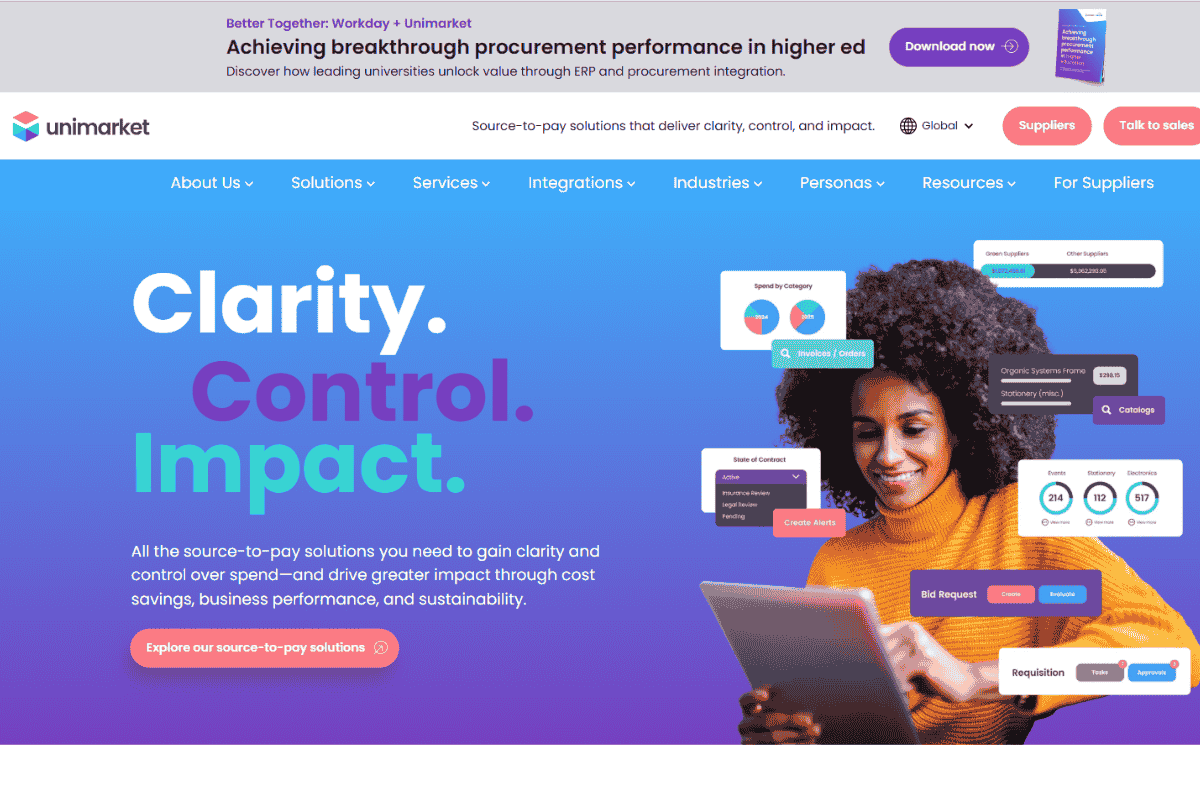
Unimarket, founded in 2005, is a mature Source-to-Pay and Source-to-Contract platform built for organisations that want end-to-end control without stitching together multiple systems. With roots in New Zealand and a strong footprint in the US market, it has become a familiar name across higher education, healthcare, government, and commercial sectors.
Its relevance lies in addressing a long-standing procurement challenge: disconnected sourcing, purchasing, invoicing, and payments that create blind spots and unnecessary admin. By offering a preconfigured, easy-to-adopt platform with strong local implementation support, Unimarket helps teams gain visibility and compliance across the full spend lifecycle.
Following its 2024 acquisition of Australian e-sourcing platform VendorPanel, the platform has further strengthened its sourcing capabilities, reinforcing its position as a practical, all-in-one procurement solution for the industry sectors and regions where it leads.
Key Info:
- Founder / CEO: Peter Kane
- Year founded: 2005
- Number of employees: 51-200
- Headquarters: Auckland, New Zealand
- Industry sectors served: Education, Healthcare, Government & Public Sector, Energy & Resources, Utilities, Transport / Facility Management
Which is the best Source to Contract software for your organization?
At first glance, these 11 solutions may seem like direct competitors. The reality is that once you dig deeper, you’ll find perhaps only 3 or 4 who are suitable for your specific needs.
Many of these solutions are pretty focused on a few specific industry sectors or geographical markets. Some are more foundational tools with a broad functionality across the whole Source-to-Contract space. Others are more deeply focused on the RFx process and started out as e-Sourcing tools. The downstream contracts module and functionality in these tools may feel basic if contract management is core to your requirement.
So, it’s really about doing your homework first. Speak to your stakeholders and understand the business needs.
- Do you need auction capability?
- How much post-bid analysis do you want to do in the tool?
- Is AI important for you to do the heavy lifting, or is it a nice-to-have?
- Or maybe you actually want an end-to-end suite that does Source-to-Pay too?
All of these will guide you towards the S2C software that’s a good fit for your organization.
Why the business case for Source to Contract Software Is Easier to Justify
One of the biggest benefits of Source-to-Contract platforms is that they work independently from your ERP system or Procure-to-Pay software.
This makes building your business case significantly simpler.
When you don’t need to connect systems together, you avoid:
- High setup expenses
- Long deployment timelines
- Heavy reliance on IT resources
- Multiple technical roadblocks.
Calculating your return on investment becomes far more straightforward.
You’re not requesting a several-year, six or seven-figure budget from Finance. Instead, you’re putting forward a targeted spend that can show measurable results in months through genuine, bottom-line savings that the platform delivers.
For procurement teams in mid-sized companies, this makes Source to Contract software a perfect first procuretech investment. You can validate what technology can achieve without gambling everything on implementing a complicated software suite.
If you want to discuss how we can help you find the right software for your specific needs, go ahead and book a free introductory call with us!