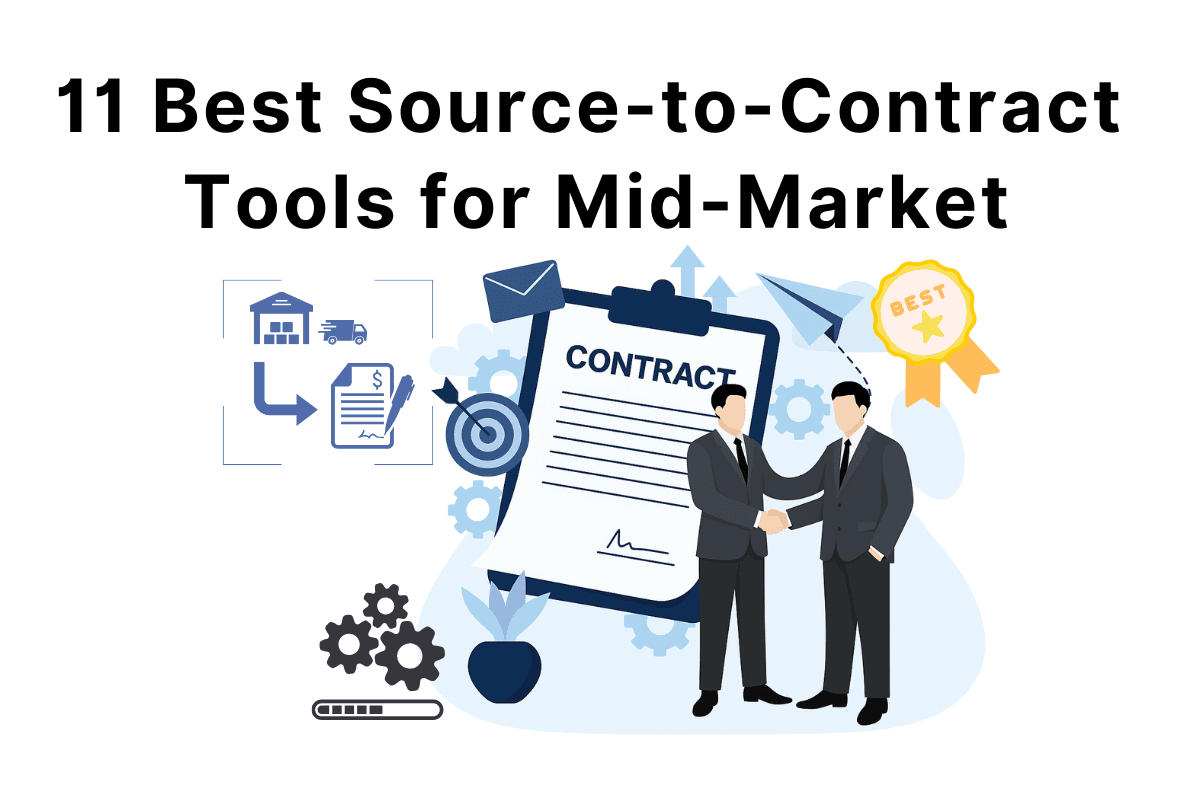

CLM tools have been around since forever. But the modern ones are disrupting the game in a big way. Procurement might just finally have the CLM software it’s been deserving of for years.
Contract Lifecycle Management (CLM) is dead. That’s what Dr. Elouise Epstein proclaimed as she took the stage at DPW Amsterdam in 2023. She’s one of our industry’s most respected voices on procuretech. Her words carried weight.
I’ve met Dr. Elouise a few times. Broadly speaking, I agree with her take on the current state of the industry. I also agree with most of her predictions. At that point in time, I could see where she was approaching this from.
Legacy CLM tools deserved her criticism. They were clunky. They were expensive, and they promised the world.
But in reality, they only really delivered expensive document repositories.
Modern CLM tools seem a world apart from what came before. The old guard designed their tools for legal teams, not procurement. The latest tools I’ve seen come from founders who have procurement backgrounds. Some have procurement consulting experience. They understand our pain points.
This potentially changes everything.
Is CLM dead?
No, CLM generally is not dead. But legacy CLM absolutely is.
Dr. Elouise was right about traditional tools. Procurement teams don’t get the most out of them, and they’re an expensive relic in most cases.
Legal teams might get their money’s worth. But these aren’t tools designed for procurement. We were an afterthought. Maybe when sales pipelines from the Office of the General Counsel started drying up, software vendors suddenly remembered that procurement existed.
Basic contract repositories aren’t dead either.
We’ve built a contracts app that we’re selling for less than $3,500!
- One time payment.
- Not a SaaS subscription.
- Self-hosted (no InfoSec objections)
Every mid-sized business needs this solution. It beats using SharePoint or spreadsheets to track renewal dates.
Want to have a look? Book a short demo here.
Workflow automation tools aren’t dead. E-signature platforms aren’t dead. Although you can achieve similar results in project management apps like Monday.com and Asana. If they’re set up correctly, of course.
You don’t need specialist tech. You just need an e-signing app for compliance reasons.
The death of CLM was greatly exaggerated. What we’re witnessing is evolution, not extinction.
Why Legacy CLM doesn’t cut it
Legacy CLM was built for legal and compliance teams. Not procurement. The focus was always on approval workflows and compliance requirements. Contract performance measurement was an afterthought.
These tools measure the wrong things from a procurement perspective.
- They track approval times.
- They monitor compliance metrics.
- They count signatures.
But they don’t tell you if your contracts deliver value.
- Data sits in silos.
- Contracts in legacy CLM tools don’t natively feed into SRM systems.
- They don’t integrate with SPM or SQM platforms, so you don’t get 360-degree vendor lifecycle management.
You can’t see the full picture.
Legal teams need different things than procurement teams.
- Legal wants version control.
- They want audit trails.
- They want compliance reporting.
Procurement wants performance data.
- We need cost insights.
- We want supplier performance.
- We need to see adoption and potential leakage.
Features reflected legal priorities, not procurement needs. The user experience suffered as a result.
Modern tools flip this script. They’re fully designed with procurement requirements at the forefront. The focus shifts to value creation rather than workflow compliance and audit trails.
Post-signature contract management is underserved
So, we already explored how procurement teams have different needs to legal teams. Yes, we need contract repositories and we need some approval workflow automation. That’s the baseline requirement.
But everything else in the pre-contract signature compliance loop is kind of a nice-to-have for us.
Clause libraries? Sure, would be nice. But let’s face it, LLMs can do a pretty good job these days if you know what to prompt.
But here’s where it gets interesting.
Procurement gains real value from post-signature contract management. This is where vendor lifecycle management (VLM) begins. This is where relationships matter more than documents. Measuring and providing a tool that facilitates these relationships is key for procurement teams.
Legacy tools stop caring once signatures are collected. Modern tools recognise this is where the real work begins.
- Contract performance monitoring starts here.
- Supplier relationship building starts here.
- Value realisation starts here.
Post-signature is where procurement professionals spend most of their time. Yet legacy tools dedicate most features to pre-signature activities. The mismatch is obvious. The opportunity is enormous.
Many of the new crop of modern CLM tools focus on the post-signature phase. They understand that signed contracts are starting points, not finish lines. They build features that support ongoing management rather than just document creation.
We need AI for market intel, negotiation, and cost recovery
Legacy CLM products offer little support for contract evaluation. They don’t tell you if your commercial terms are favourable compared to market standards. They just store documents without analysing content.
There’s minimal useful AI built into traditional legaltech contract management software.
- No market insights.
- No negotiation strategising options.
- No leakage recovery capabilities.
- No fraud detection features.
The only benchmarking usually relies on clause libraries and historical documents.
This approach misses massive opportunities.
Modern CLM tools leverage AI for competitive advantage.
- They analyse contract terms against market benchmarks.
- They identify negotiation opportunities.
- They spot cost recovery possibilities.
- They detect anomalies that suggest fraud or errors.
AI transforms contracts from static documents into dynamic intelligence sources.
- Terms become data points.
- Clauses become insights.
- Obligations become actionable intelligence.
- Market intelligence becomes automatic.
The system analyses your terms against industry standards. It identifies favourable and unfavourable clauses. It suggests negotiation strategies for renewals.
Cost recovery becomes systematic. AI identifies billing errors. It spots missed savings opportunities. It flags non-compliant supplier behaviour. It quantifies financial impact.
Negotiation becomes strategic rather than reactive. Historical data informs future discussions. Market intelligence strengthens your position. Performance data supports your arguments.
An introduction to 4 modern CLM startups
Below are a selection of four startups that are AI-first, modern CLM tools. The short overviews are based on recent conversations and short demos I’ve seen from founders, plus what’s on their websites.
This isn’t Spend Matters or Gartner-level research. Nonetheless, I hope it tickles your curiosity enough to investigate further.
You might just find they solve your biggest challenge, at a fraction of legacy CLM software costs.
FlipThrough
FlipThrough’s platform uses autonomous AI agents—specifically sub‑agents trained in negotiation tactics, risk analytics, and game theory—to automate agreement analysis, prep, and live vendor negotiations
**Key Features and Functionality**
- Rapid proposal and contract analysis with risk scoring and value insights
- AI‑generated redlines, amendments, and customised talking points for negotiation
- Voice‑activated agent delivering live negotiation support and incremental contract edits
- Side‑by‑side comparison tool for multiple proposals for streamlined decisions
- Centralised collaboration interface for cross‑functional teams (legal, finance, procurement)
Flipthrough is focused (for now) exclusively on IT and consultancy spend.
Dobs.ai
Dobs.ai leverages AI—specifically automated invoice and contract analysis—to detect hidden overpayments, discrepancies, and optimises billing enforcement across procurement and finance operations.
**Key Features and Functionality**
- Retrospective analytics on contracts, invoices, and purchase orders to uncover value leakage
- Detailed reporting per supplier and transaction, highlighting overpayments
- Pre‑drafted automated emails to vendors requesting refunds or discounts
- Real‑time invoice validation with explanations and vendor correction workflows
- Interactive dashboards to monitor discrepancies and recovery actions
- Integration with enterprise systems to prevent future leakage
ContractGenie by Predactica
ContractGenie utilises Gen AI to transform unstructured contracts and supplier data into structured, actionable intelligence.
**Key Features and Functionality**
- Rapidly extracts and organises key contract metadata for visibility and traceability
- Clause/term search and review capabilities
- Automated reporting and alerts on critical contract dates
- Natural language Q&A interface for querying contract contents
AllCaps
AllCaps embraces a hybrid model combining AI-driven negotiation workflows with on-demand real human negotiators for tailored, high-stakes contract renewals described under the “Calm™ AI” umbrella. The platform automates the whole renewal cycle—from analysis to execution and approval—without requiring configuration.
**Key Features and Functionality**
- Captures missed renegotiation opportunities, helping recover the estimated 10–20% of indirect spend lost due to passive renewal management
- AI extraction of 30+ contract attributes and tailored negotiation strategies.
- Workflow automation: automated outreach, negotiation execution, and escalation mechanisms.
- Approval orchestration through dashboards with digital signatures and multistakeholder visibility.
- Centralised contract repository with SLA and compliance tracking.
If any of these sound interesting, reach out to me and I’ll happily connect you to the Founders.
Others (not startups) who are bucking the trend
These are focused on post-signature activities alongside pre-signature functionality. Both platforms align with vendor lifecycle management and supplier relationship management principles. Think of them as hybrids between traditional CLM and modern SRM systems.
Gatekeeper
Gatekeeper combines contract management with vendor lifecycle management. Their platform tracks suppliers from initial engagement through contract renewal. Integration capabilities connect contractual and operational data.
Their strength lies in workflow automation and approval management. Complex procurement processes become streamlined. Stakeholder engagement improves through automated notifications and task management.
The system provides comprehensive vendor intelligence. Contract terms combine with performance data. Risk assessments incorporate both contractual and operational factors. Decision-making becomes more informed.
Birdseye
Birdseye focuses on contract performance monitoring and vendor relationship management. Their platform transforms contracts into active management tools rather than passive documents.
Performance tracking capabilities monitor supplier delivery against contractual commitments. Alert systems notify users of non-compliance or performance issues. Dashboard views provide real-time insights into contract portfolios.
Their approach emphasises relationship management over document management. Contracts become frameworks for ongoing collaboration. Performance data drives relationship decisions.
Conclusion
There’s still plenty of innovation happening in the CLM space. Just probably not where you’d expect to find it.
Legacy vendors continue building features for legal teams. Modern vendors focus on procurement requirements.
Innovation happens at the margins, not in market leaders’ boardrooms. Startups understand procurement pain points better than established players. They build solutions rather than features, and they solve problems rather than tick boxes.
Ditch the legacy tech and explore alternatives. You’ll find tools that genuinely help manage contracts better. Performance improves. Costs decrease. User satisfaction increases.
If you need a basic repository at a competitive price, the choice becomes obvious.
Modern solutions deliver more value at lower costs. They integrate better with existing systems. They focus on procurement workflows.
The revolution starts with recognition. Legacy CLM doesn’t serve procurement well. Modern alternatives exist. They work better and cost less.
The question isn’t whether to change. It’s about how quickly you can implement something better.