
Procure-to-Pay software can transform your business operations.
A single platform for your entire procurement process delivers simplicity and efficiency. It liberates procurement professionals from administrative drudgery, allowing them to focus on strategic, value-added work that drives both top and bottom line results.
CFOs also benefit from several crucial advantages:
- Increased compliance across all purchasing
- Simplified, streamlined processes
- Elimination of maverick spend that damages cash flow
- Fewer accounts payable discrepancies
Yet P2P software for mid-market companies is often misunderstood. Frequently, the large, enterprise software platforms are considered. But these are bloated with complex features and lengthly implementations that mid-market businesses can’t afford.
In this article we’ll look at those software platforms that benefit the lower end of mid-market landscape.
Understanding the procurement software landscape
Before we dive into specific solutions, let’s clarify what we mean by different types of procurement software.
Intake-to-Pay software starts at the very beginning of the procurement journey. It captures initial purchase requests from business users and guides them from here, right through to invoice payment to the supplier. These platforms emphasise the user-friendly intake layer. Here requests are captured, triaged, and routed appropriately in a modern, easy-to-use front end.
Process Orchestration platforms sit above existing systems. They act as a coordination layer, connecting different tools and creating seamless workflows across departments. These solutions are great at meeting users where they work, in tools like Slack or Microsoft Teams.
Source-to-Pay (S2P) suites cover the complete procurement lifecycle. They start with strategic sourcing activities like RFPs and sometimes e-auctions. Then, they offer complete workflows through contracting, purchasing, receiving, and payment. These are often, but not always, designed for large enterprises. Some S2P platforms operate in mid-market too, but we’ve not covered them in this article.
Procure-to-Pay (P2P) software differs from S2P in that it doesn’t include the sourcing or contracting piece. It’s purpose is to handle the transactional process of requisitioning, purchase order creation, goods receipt, invoice processing, and payment. P2P solutions focus on the execution of operational purchasing, rather than strategic sourcing and supplier management.
This article focuses specifically on Procure-to-Pay software. We’ll cover Intake-to-Pay and Source-to-Pay solutions in separate articles.
Procure-to-pay software for mid-market businesses: Key factors
Mid-market companies have distinct requirements when evaluating P2P software:
- Features that match their operational complexity
- Ease of use that drives adoption without extensive training
- Fast implementation measured in weeks, not months
- Pricing that aligns with mid-market budgets
- ROI delivered in under 12 months
Complex, lengthy implementations waste both time and money. The solution must prove its value quickly.
Several providers cater specifically to mid-market businesses with appropriate functionality and pricing.
What is considered a mid-market business?
For this article, we’re focusing on companies with annual revenue between $50 million and $500 million. In other words, we’ve focused on the lower end of mid-market.
Below $50 million, we define businesses as small and medium-sized enterprises (SMEs). The European Union uses a very similar definition. SMEs usually only need lower-priced solutions with more basic functionality.
Mid-market businesses can invest in P2P software and achieve fast returns. This assumes they have proper change management and adequate procurement talent.
Above $500 million is touching on the upper end of mid-market. Some of the traditional, legacy enterprise Source-to-Pay suites are active in this space. Names such as Coupa and Jaggaer have moved downmarket, as the enterprise space has become crowded.
Then, once you get above $1 billion, we consider that the enterprise segment. Here, established, legacy S2P and S2C players such as SAP Ariba and GEP are popular solutions.
This is not sponsored content
No provider has paid to appear on this list. Ask yourself whether the same is true of other similar articles you read.
Our 13 best Procure-to-Pay software solutions for the mid-market.
1. Procurify
Procurify is redefining how mid-market organisations manage their spend. Founded in 2013 and headquartered in Vancouver, it unites procurement, accounts payable, and expenses in one AI-powered platform. By bringing these processes together, Procurify gives finance and procurement teams real-time visibility and control over company-wide spending.
Users can raise purchase requests, approve on the go, automate invoices, and manage budgets and vendors, all from one central hub. With integrations to NetSuite, QuickBooks, Xero, and Sage Intacct, plus PunchOuts for Amazon Business and Staples, Procurify streamlines the entire procure-to-pay journey while helping teams uncover new cost-saving opportunities.
Key Info:
- Founder / CEO: Chad Gaydos
- Year founded: 2013
- Number of employees: 51-200
- Headquarters: Vancouver, Canada
- Industry sectors served: Technology, biotechnology, education (including charter schools), healthcare, manufacturing, non-profit organisations.

2. Precoro
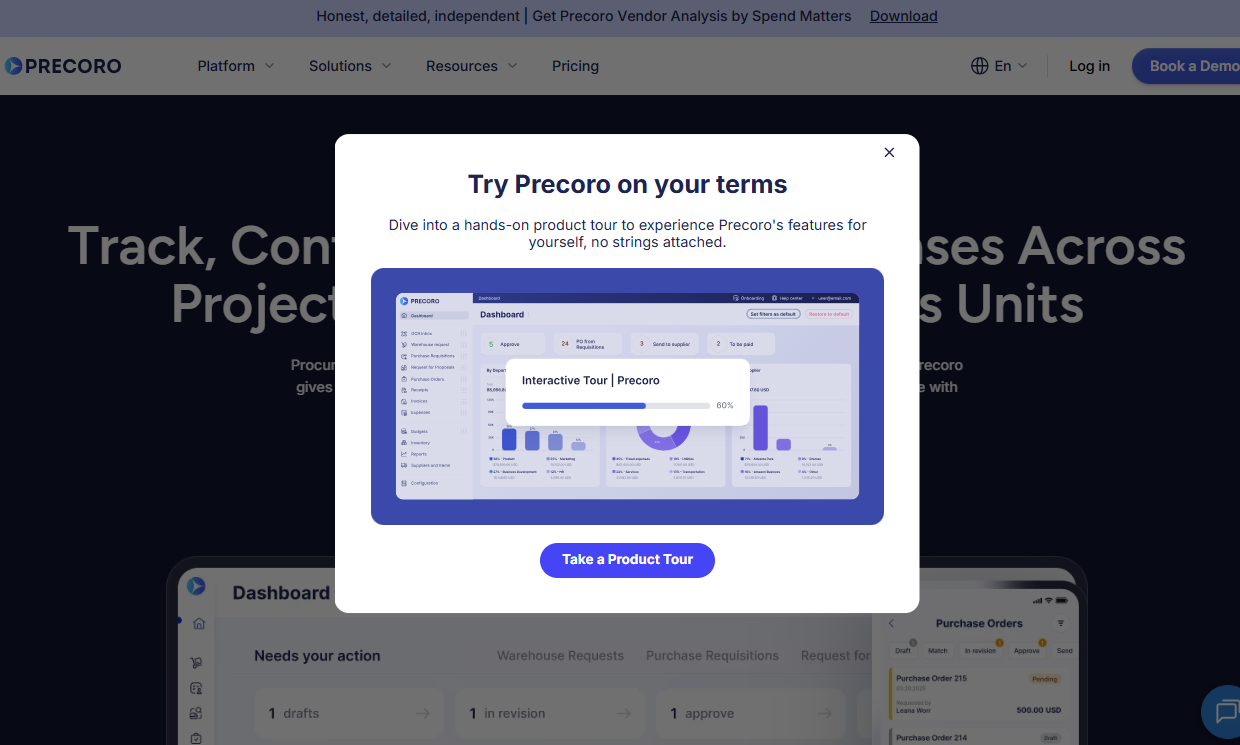
Precoro is helping growing businesses take control of their purchasing. Founded in 2015 and based in Brooklyn, it offers a cloud-based intake-to-pay system that replaces messy spreadsheets with a simple, centralised process. Designed for SMEs and mid-market firms, Precoro automates approvals, tracks budgets, and manages suppliers, all from one intuitive interface.
It integrates seamlessly with QuickBooks, Xero, and NetSuite, and now supports PunchOut connections with Amazon Business, Home Depot, and Staples. With its focus on usability and flexibility, Precoro makes procurement smarter, faster, and easier to manage across the entire organisation.
Key Info:
- Founder / CEO: Andrew Zhyvolovych
- Year founded: 2015
- Number of employees: 51-200
- Headquarters: Brooklyn, New York
- Industry sectors served: Biotechnology, technology, construction, education, healthcare, hospitality, non-profit, renewables, etc
3. Flowie

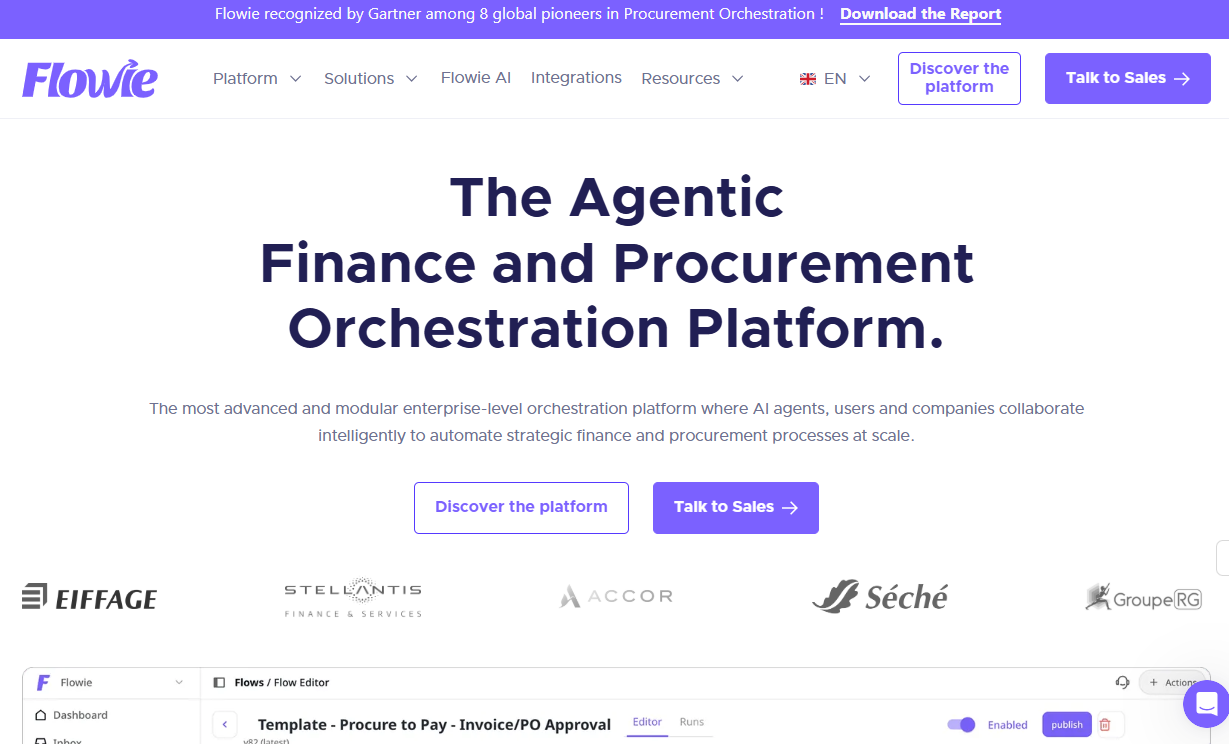
Flowie is reshaping how finance and procurement teams work together. Founded in 2023 and based in Paris, it combines procure-to-pay, order-to-cash, and cash flow operations into one AI-driven platform. Its built-in CoPilot uses generative AI to simplify intake, approvals, and vendor collaboration while ensuring global e-invoicing compliance.
With seamless integrations to SAP, Workday, Salesforce, and more, Flowie gives mid-sized and enterprise organisations real-time visibility into spend, payments, and ESG performance, bringing procurement, finance, and cash ops together in one unified system.
Key Info:
- Founder / CEO: Yann Ravel‑Sibillot
- Year founded: 2023
- Number of employees: 11-50
- Headquarters: Paris, France
- Industry sectors served: Finance & accounting, procurement, sales, IT & security, legal.
4. Fraxion
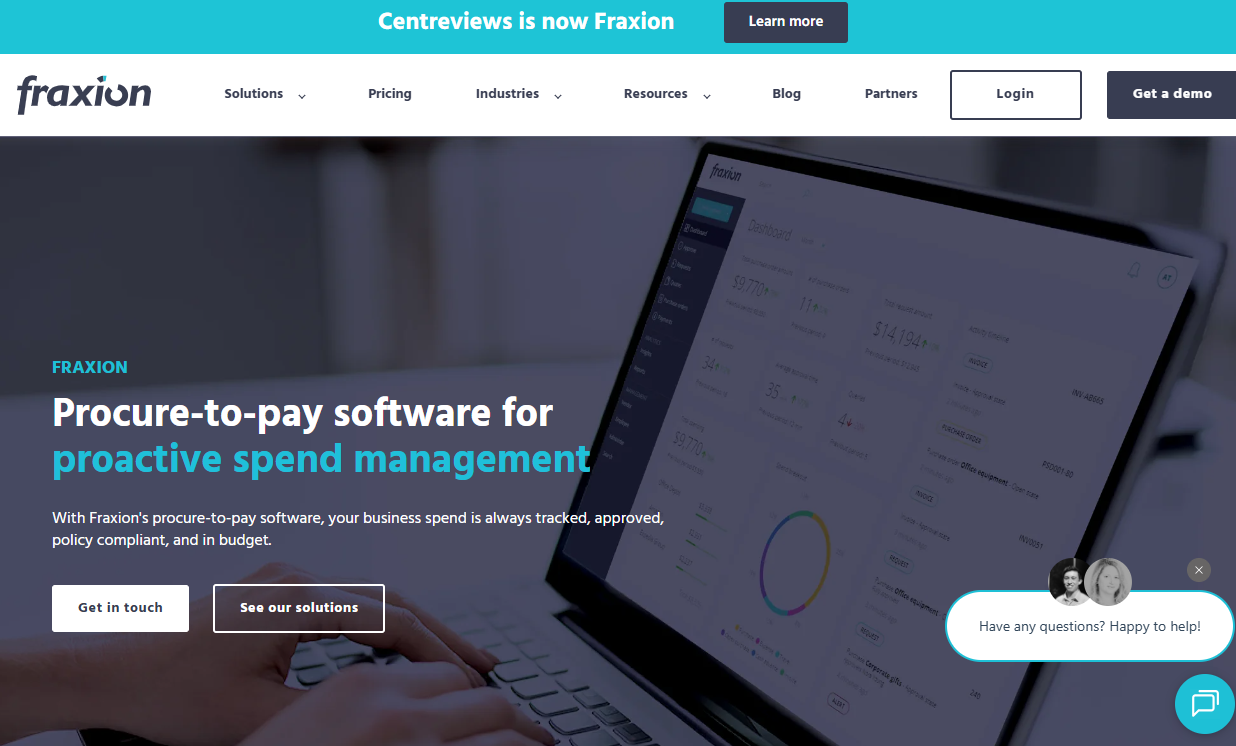
Fraxion is transforming how organisations control and manage their spending. Founded in 1997 and based in Bellevue, it brings procurement, approvals, and expense management together in one easy-to-use, cloud-based system. Designed for growing teams that need structure without complexity, Fraxion automates purchasing workflows, enforces budgets, and provides full visibility into company-wide spend.
Trusted by over 1,000 organisations worldwide, it integrates with Sage, NetSuite, Microsoft Dynamics, and Xero, and supports PunchOuts with Amazon and Grainger—making it easier than ever to buy smarter and keep spending under control.
Key Info:
- Founder / CEO: Stanton Jandrell
- Year founded: 1997
- Number of employees: 51-200
- Headquarters: Seattle, Washington
- Industry sectors served: Education, agriculture, healthcare, manufacturing & distribution, non-profits and government organisations.
5. Procurement Express
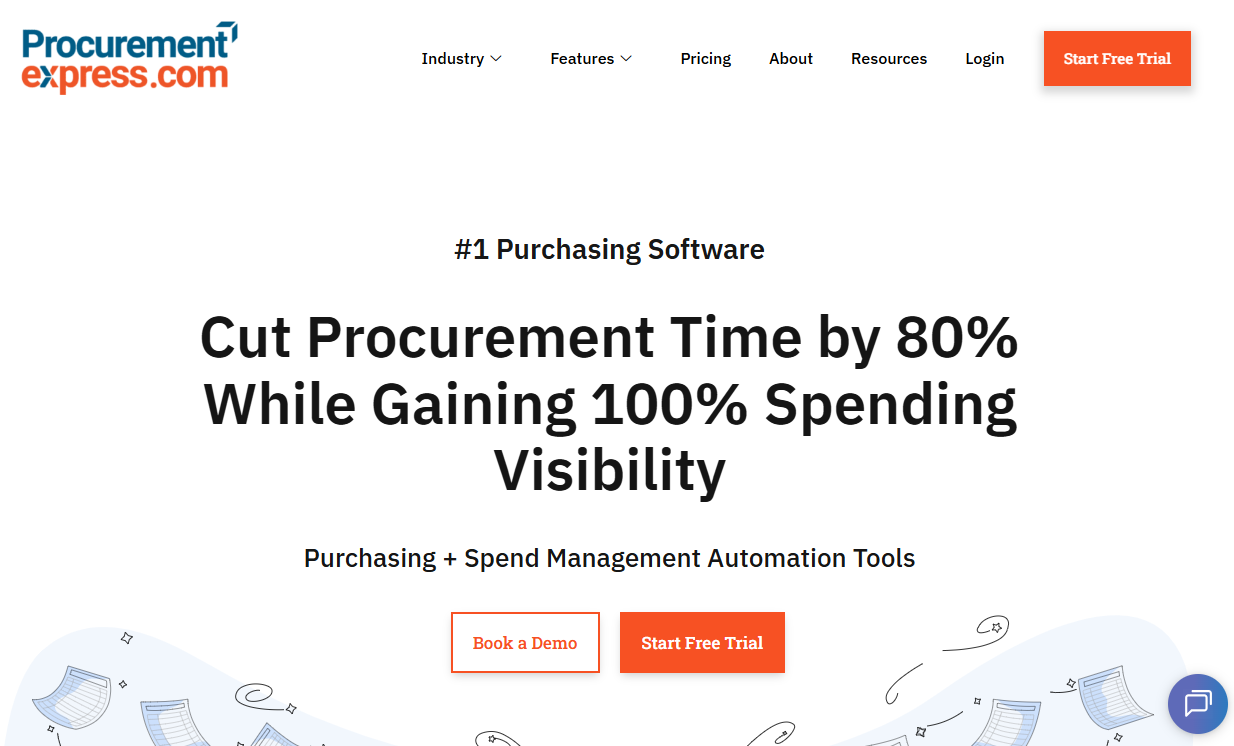
Procurement Express is making purchasing simpler for growing businesses. Founded in 2014 and based in Dublin, the company offers a cloud-based procure-to-pay solution tailored for SMEs. Its platform focuses on everyday procurement tasks, raising purchase orders, tracking budgets, and matching invoices, helping teams save time and stay in control of spending.
With real-time budget visibility, fast approvals, and easy invoice matching, ProcurementExpress.com keeps operations running smoothly. It integrates with QuickBooks Online, Xero, and Zapier, and its mobile app lets users manage purchasing on the go. Designed for ease and efficiency, it’s a practical tool for modern finance and procurement teams.
Key Info:
- Founder / CEO: James Kennedy
- Year founded: 2014
- Number of employees: 11-50
- Headquarters: Dublin, Ireland
- Industry sectors served: Education, construction, healthcare, manufacturing, hospitality, government and non-profit sectors.
6. Prokuria
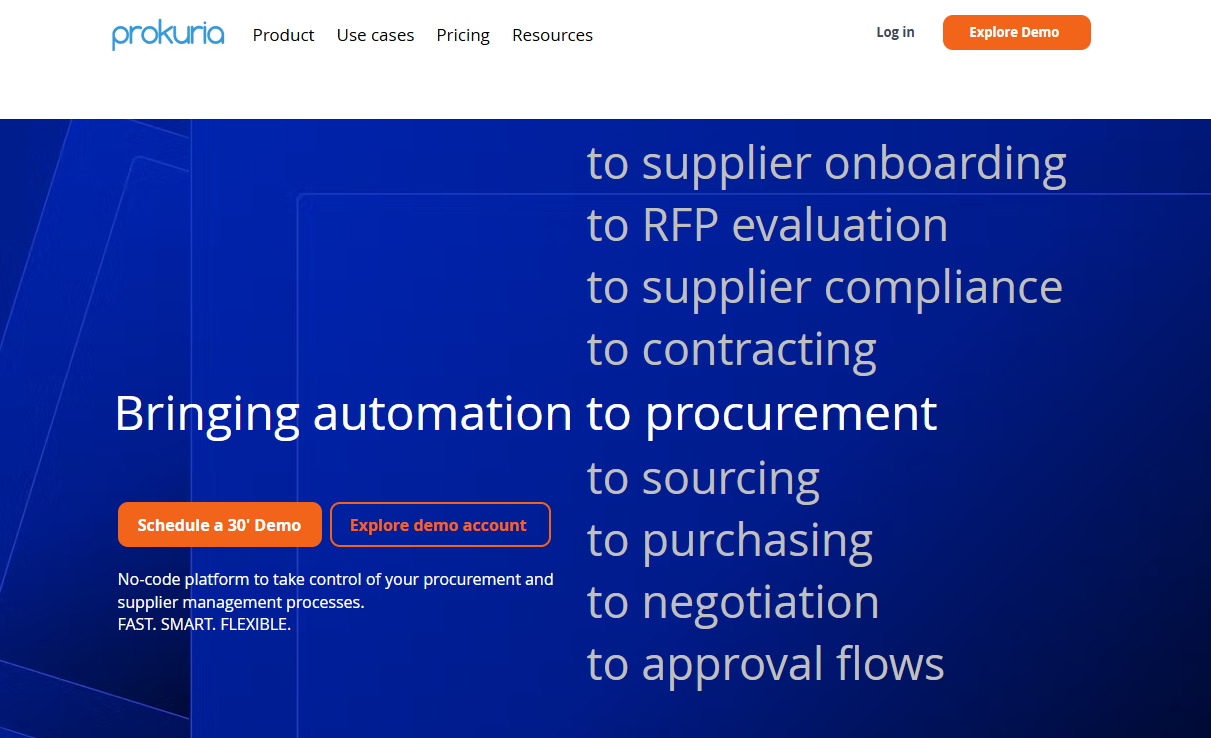
Prokuria is modernising sourcing and supplier management for procurement teams. Founded in 2015 and based in Bucharest, it offers a no-code, cloud-based platform that automates RFPs, reverse auctions, and supplier onboarding, helping organisations cut costs and boost efficiency.
Designed for flexibility, Prokuria lets teams customise workflows without technical support, making it ideal for manufacturing, construction, and retail sectors. It integrates with tools like DocuSign, Microsoft Dynamics 365, Power BI, and Google Data Studio, ensuring seamless collaboration and visibility across procurement and finance functions.
Key Info:
- Founder / CEO:
- Year founded: 2015
- Number of employees: 11-50
- Headquarters: Bucharest, Romania
- Industry sectors served: Airlines, construction, energy & utilities, financial services, manufacturing, non-profits, retail, tech, hospitality, food & beverage, pharma & health, logistics & transport.
7. ProcureDesk
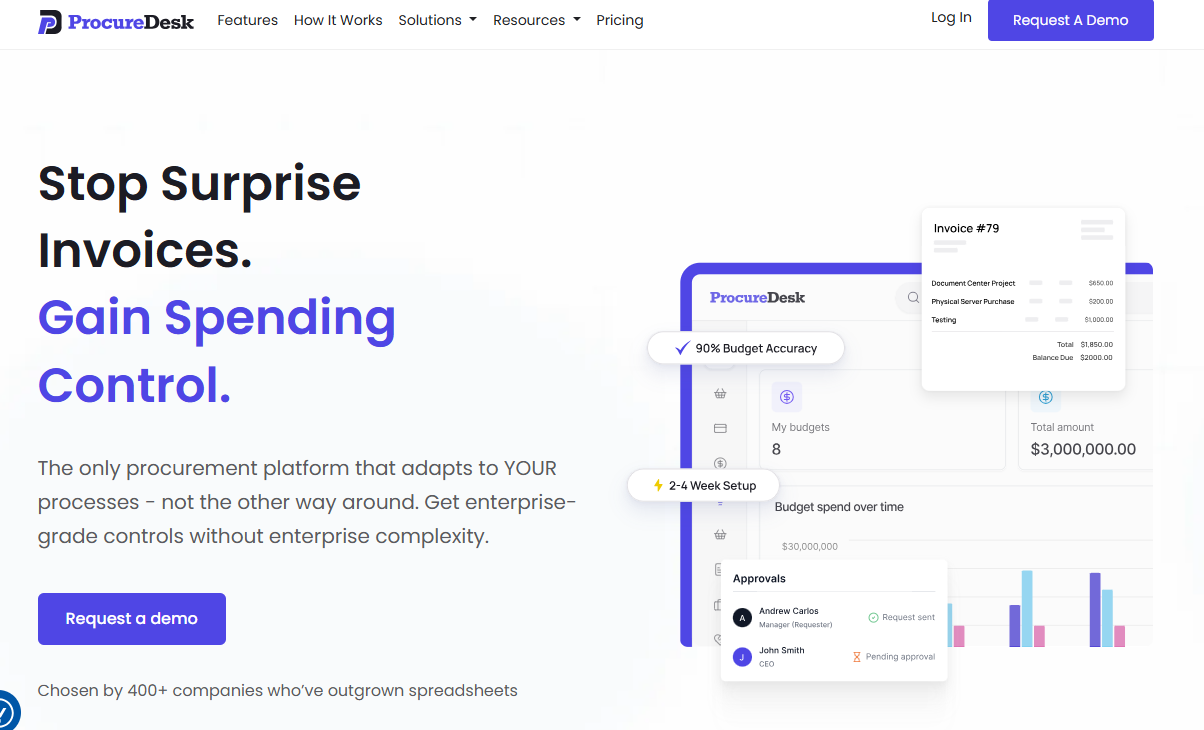
ProcureDesk is helping small and mid-sized businesses modernise how they buy and pay for goods. Founded in 2015 and based in Cincinnati, it offers a cloud-based procure-to-pay platform that connects procurement, finance, and compliance in one place.
The system automates purchase orders, approvals, and invoice matching while providing real-time budget visibility. With integrations to QuickBooks, NetSuite, Xero, and Microsoft Dynamics, ProcureDesk makes it easier to manage spend and prevent duplicate payments. Its simple interface and fast setup help teams gain control, transparency, and efficiency across their entire purchasing process.
Key Info:
- Founder / CEO: Sachin Sharma
- Year founded: 2018
- Number of employees: 11-50
- Headquarters: Cincinnati, Ohio
- Industry sectors served: Biotechnology & life sciences, construction, manufacturing, non-profits, professional services, schools & education institutes.
8. PayEm
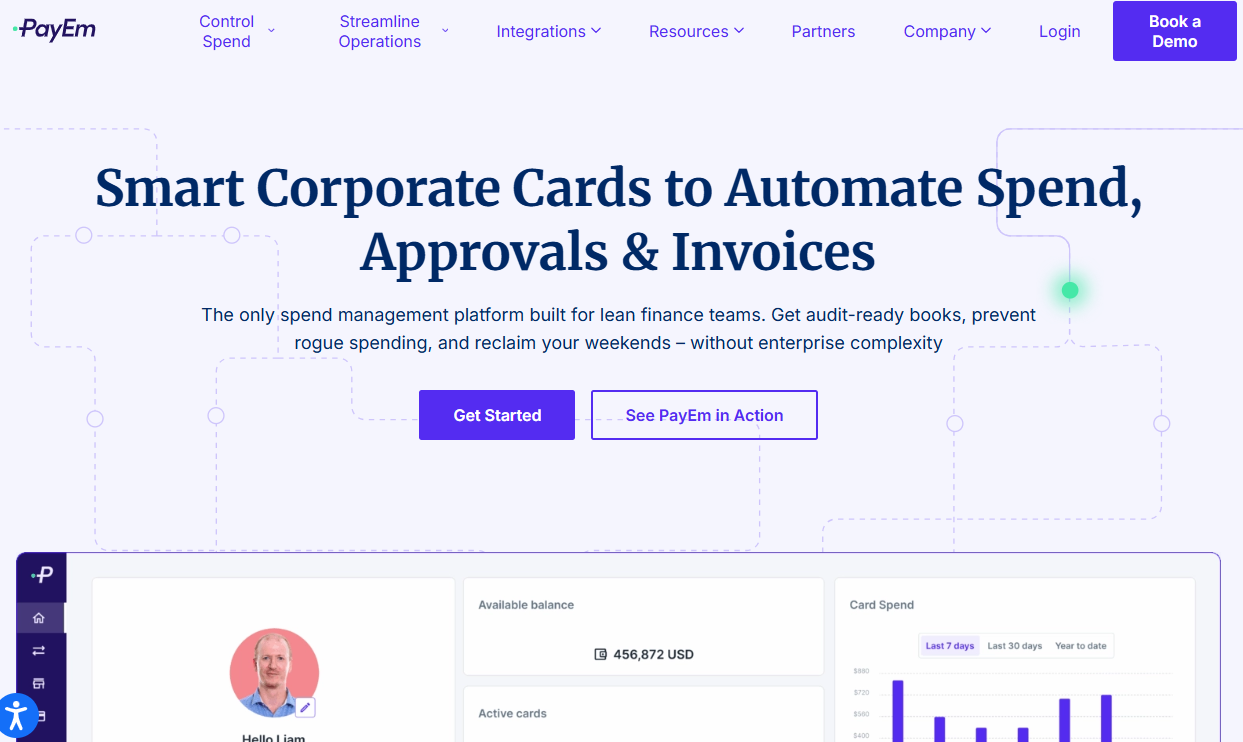
PayEm is redefining how organisations manage purchasing and payments. Founded in 2019 and based in Tel Aviv, it offers an AI-powered procure-to-pay platform that unites requests, approvals, payments, and reconciliation in one system.
Built for finance, operations, and procurement teams, PayEm automates approvals, processes invoices, and issues corporate cards with real-time budget tracking. It integrates with NetSuite, QuickBooks, and HR tools like HiBob and BambooHR.
With its recent launch of a Digital Wallet for fee-free international payments, PayEm continues to simplify global spend management and give businesses full control over operational expenses.
Key Info:
- Founder / CEO: Itamar Jobani
- Year founded: 2019
- Number of employees: 51-200
- Headquarters: New York, New York
- Industry sectors served: Software/technology, healthcare, internet/media/advertising, business services, and finance teams in global organisations.
9. Planergy

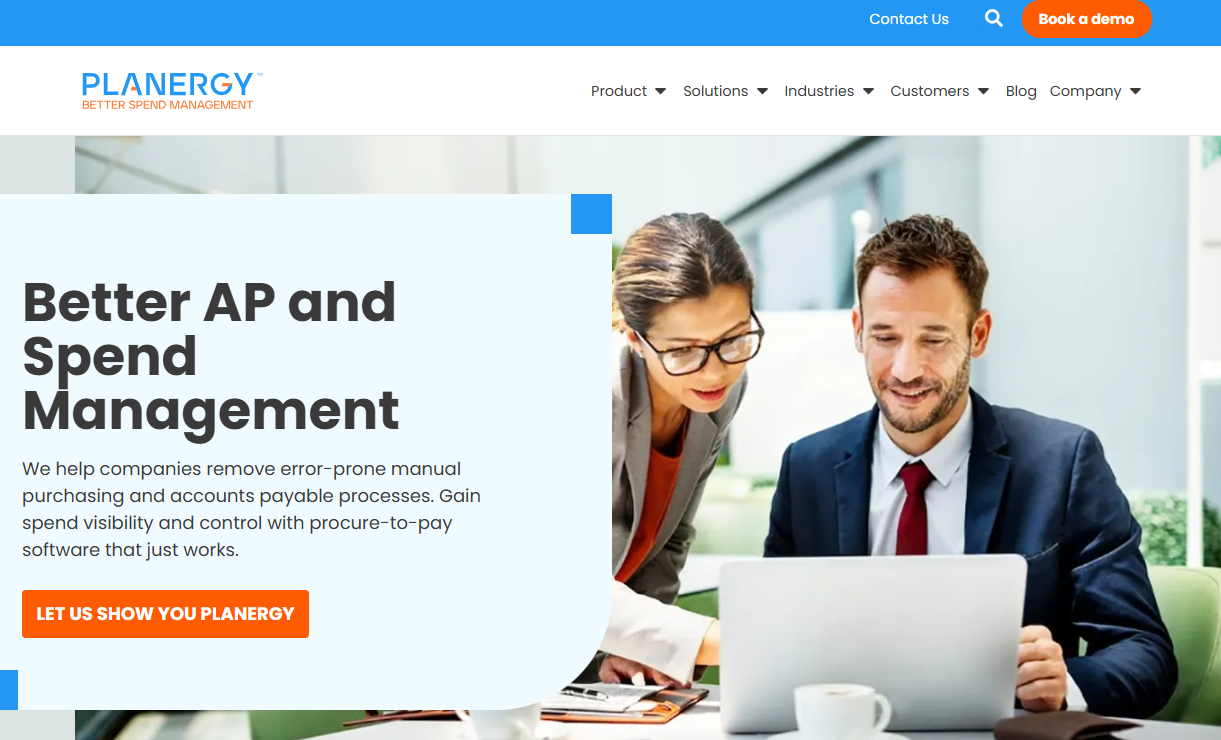
Planergy is helping mid-sized organisations take control of their spending. Founded in 2009 and based in Boston, it offers a cloud-based spend management platform that automates procurement and accounts payable processes.
By connecting finance, procurement, and compliance, Planergy enables teams to manage budgets, prevent off-contract spending, and gain real-time visibility into company-wide spend.
The platform integrates with QuickBooks, Xero, Microsoft Dynamics, SAP, and Sage, and supports rapid implementation, most customers go live in under 30 days. With over 1,200 customers worldwide, Planergy delivers a fast, user-friendly way to digitise procurement and boost operational efficiency.
Key Info:
- Founder / CEO: Michael Higgins
- Year founded: 2009
- Number of employees: 11-50
- Headquarters: Boston, Massachusetts
- Industry sectors served: Education, assisted living & care homes, healthcare, biotech, non-profit, logistics, hospitality, and manufacturing.
10. Airbase (Paylocity)
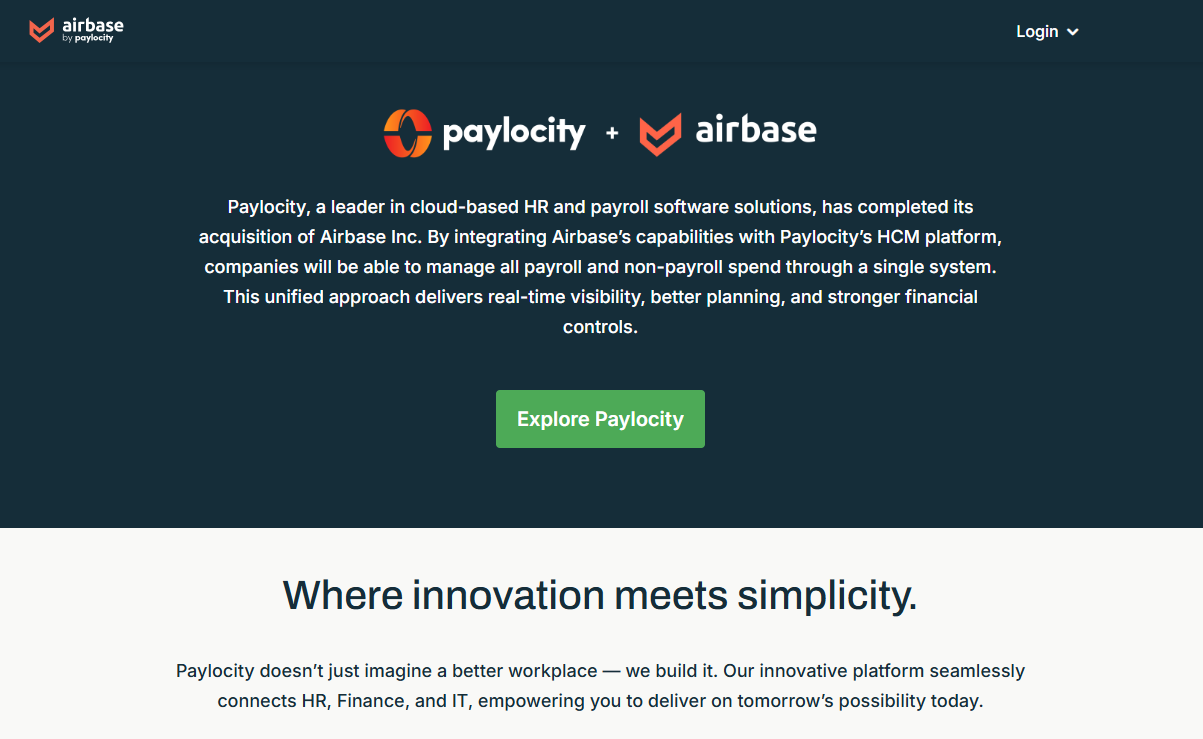
Airbase by Paylocity is redefining how finance teams manage company spending. Founded in 2017 and based in San Francisco, it offers a unified spend management platform that brings procurement, accounts payable, expense management, and corporate cards together in one system.
Designed for mid-market and enterprise organisations, Airbase automates approvals, invoice capture, and payments while giving teams real-time visibility into non-payroll spend. It integrates with NetSuite, Sage Intacct, QuickBooks, and Workday, supporting seamless collaboration across finance and operations.
Now part of Paylocity, Airbase continues to innovate with features like Touchless AP, advancing AI-powered automation across the entire procure-to-pay lifecycle.
Key Info:
- Founder / CEO: Thejo Kote
- Year founded: 2017
- Number of employees: 201-500
- Headquarters: San Francisco, California
- Industry sectors served: Finance & accounting teams (controllers, CFOs) dealing with non-payroll spend management, procurement, and expense workflows.
11. Spendesk
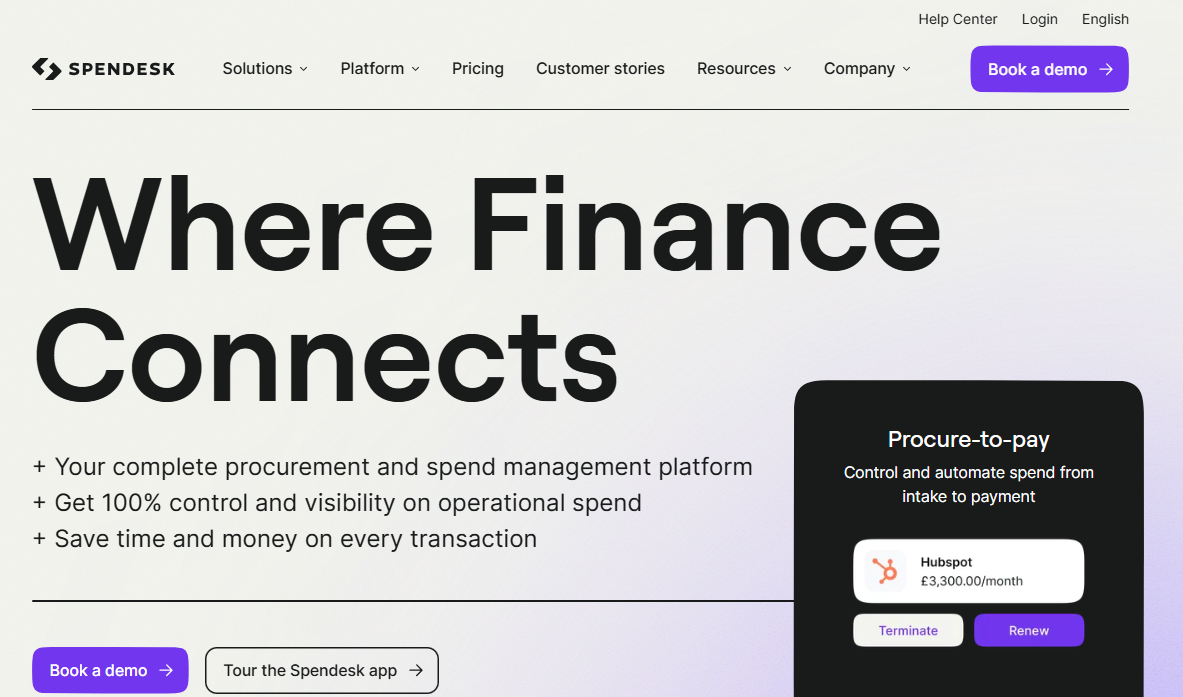
Spendesk is changing the way small and mid-sized businesses handle spending. Founded in 2016 and based in Paris, it offers an all-in-one spend management platform that brings procurement, payments, and accounting together under one roof.
By eliminating manual admin and disconnected tools, Spendesk gives finance teams real-time visibility and control over budgets and expenses. It automates requests, approvals, and reimbursements, helping companies stay compliant and efficient.
With integrations to Xero, QuickBooks, Sage, and Personio, Spendesk streamlines financial operations for more than 4,000 companies across Europe, offering enterprise-grade control without the complexity.
Key Info:
- Founder / CEO: Axel Demazy
- Year founded: 2016
- Number of employees: 501-1000
- Headquarters: Paris, France
- Industry sectors served: Construction, engineering, education, healthcare, manufacturing, consumer goods, technology, software, professional services, legal, insurance, and financial services.
12. Payhawk

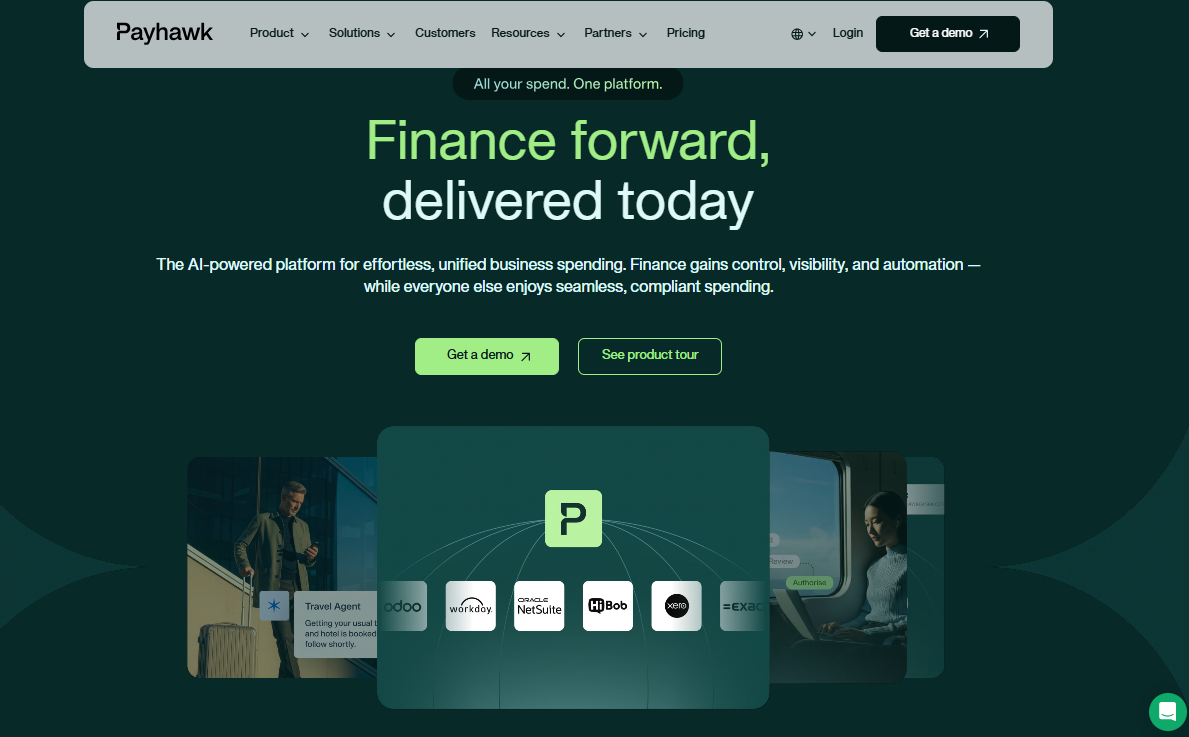
Payhawk is changing how finance teams handle spend across global operations. Founded in 2018 and headquartered in London, it brings corporate cards, expense automation, and invoice management together in one streamlined procure-to-pay platform.
Designed for mid-market and enterprise businesses, Payhawk helps finance teams gain full visibility and control over spending across multiple entities and currencies. From issuing cards and managing approvals to automating reconciliation, everything happens in one connected ecosystem.
With deep integrations to NetSuite, Xero, QuickBooks, and Microsoft Dynamics, Payhawk eliminates manual work and disconnected tools—making company-wide spend smarter, faster, and fully compliant.
Key Info:
- Founder / CEO: Hristo Borisov.
- Year founded: 2018
- Number of employees: 201-500
- Headquarters: London, England
- Industry sectors served: Retail & hospitality, aviation, automotive manufacturing, travel, SaaS/technology.
13. Ramp

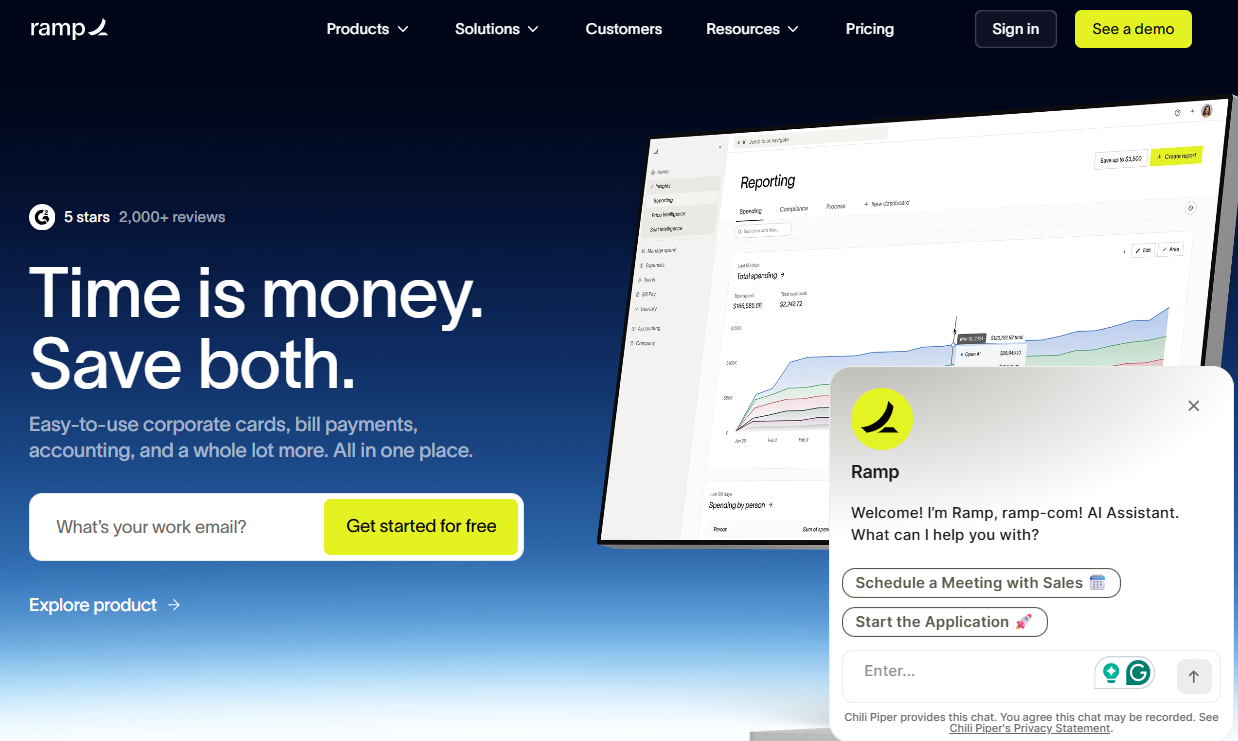
Ramp is redefining how companies manage procurement and spending. Founded in 2019 and based in New York, it offers a finance automation platform that brings purchasing, payments, and expense management into one unified system.
Used by more than 45,000 businesses, Ramp helps finance teams gain real-time visibility into company-wide spend while cutting manual work through automation. From corporate cards and invoice processing to procurement intake and travel expenses, it covers the entire procure-to-pay cycle.
Integrating with QuickBooks, NetSuite, Xero, and Slack, Ramp delivers a connected, AI-driven approach to spend control, helping organisations save time, money, and effort.
Key Info:
- Founder / CEO: Eric Glyman
- Year founded: 2019
- Number of employees: 1001-5000
- Headquarters: New York, New York
- Industry sectors served: Technology/SaaS, manufacturing, construction, healthcare, consumer goods & retail, and services/agencies.
Which is the best procure-to-pay software for mid-market businesses?
So, which P2P solution is best for your business? There is no right or wrong answer.
But, some of these are more geared up to serve service- and tech-based businesses. Others are more focused on manufacturing, retail, and businesses more generally which purchase materials and hold inventory.
You’ll easily spot this once you see a few demos and read a few of their websites.
Also, just because another organisation has had success with one solution doesn’t mean that it will work well in yours. We touch on this in our article about 10 things to consider when sourcing procurement software.
We also covered in detail the difference between procure-to-pay and source-to-pay software, in case you’re not sure which one is right for you.
Ultimately, the best software boils down to the size, maturity and individual requirements or your business.
If you need features such as integration with SAP and Oracle, the solutions we’ve listed above probably aren’t a good fit. Whereas if you need simple connection to your accounting system, or to integrate with a mid-market focused ERP such as NetSuite or Sage, then these solutions are fine.
If you’re still a bit confused about what may be the best type of solution for you, click the link and book a FREE 30-minute intro call.
We’d love to see how we can help.